
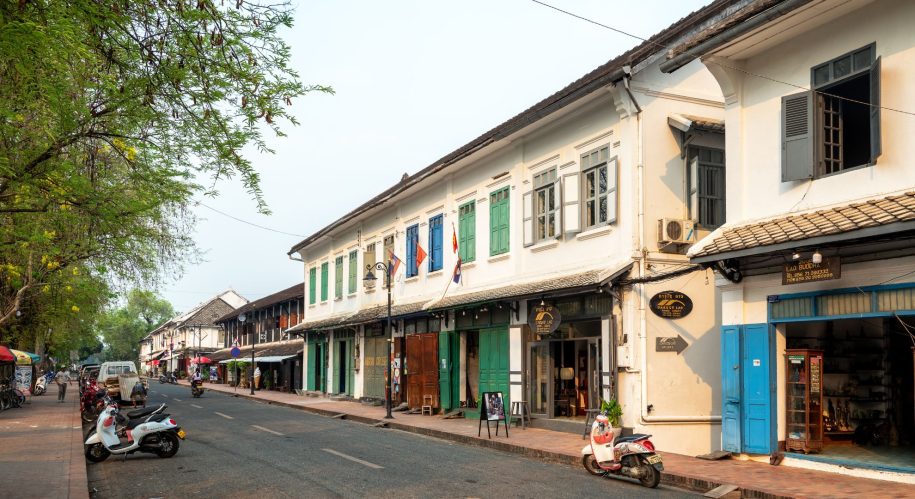
When the sun sets behind the mountains and the Mekong River turns a deep shade of copper, Luang Prabang begins to reveal a different personality. Quiet, unhurried, and deeply atmospheric, evenings in Luang Prabang are not about nightlife in the conventional sense. Instead, they are about rhythm, ritual, and the subtle beauty of everyday life unfolding after dark.
Unlike many Southeast Asian destinations where the night pulses with neon and noise, Luang Prabang maintains its calm. The streets soften, conversations slow, and the city’s UNESCO-listed heritage feels more alive, not less, once daylight fades.
A City That Transitions Gently Into Night
Luang Prabang’s evening transformation is gradual. As dusk settles, monks return to their monasteries, shopkeepers light warm bulbs over wooden doorways, and locals gather near the riverbanks to cool off after the day’s heat. The pace never rushes. This gentle transition is one of the city’s defining traits and a key reason why nighttime here feels authentic rather than staged.
The colonial-era architecture, Buddhist temples, and traditional Lao houses take on a golden glow under streetlights. Shadows stretch across narrow lanes, revealing details often missed during the day: carved shutters, faded murals, and quiet courtyards hidden behind wooden gates.
The Night Market As A Living Cultural Space
The Luang Prabang Night Market is often the first stop after sunset, but it is far more than a tourist attraction. Stretching along Sisavangvong Road, the market reflects a blend of local commerce and cultural continuity. Handmade textiles, silver jewelry, bamboo crafts, and indigo-dyed fabrics are displayed alongside everyday household items.
What sets this market apart is its atmosphere. There is no aggressive selling, no loud music, no pressure to rush. Vendors chat with neighbors, children help arrange scarves, and shoppers browse at their own pace. The market becomes a social space where daily life continues naturally, offering insight into how tradition and modern tourism coexist.
Street Food And The Evening Food Culture
Food plays a central role in Luang Prabang after dark. Small stalls set up grills and steamers, filling the air with the scent of lemongrass, charcoal, and fermented chili paste. The famous vegetarian buffet, simple noodle soups, grilled river fish, and sticky rice snacks attract both locals and visitors.
Eating here is informal and communal. Plastic stools line the pavement, strangers sit side by side, and meals stretch longer than planned. This is where everyday Lao life becomes most visible, unfiltered and welcoming, revealing food not as a performance but as a shared necessity and pleasure.
Temples At Night: Silence And Spiritual Continuity
While temples dominate the daytime landscape of Luang Prabang, they take on a different presence at night. Many remain softly lit, their golden facades glowing against the dark sky. The sounds of chanting fade, replaced by near silence broken only by insects and distant footsteps.
Walking past a temple in the evening offers a rare moment of stillness. Without crowds, the spiritual heart of the city feels closer. These quiet moments reveal how Buddhism shapes daily life not just through rituals, but through rhythm, patience, and calm.
The Mekong River After Sunset
The Mekong River becomes a focal point once the heat subsides. Locals gather along its banks to talk, watch boats pass, or simply sit and observe the water. Small riverside bars and cafés offer subdued spaces to enjoy a drink without disrupting the calm.
The river at night reflects both tradition and change. Fishing boats move slowly, silhouettes against the moonlight, while nearby conversations drift between Lao, French, and English. It is here that Luang Prabang’s layered identity becomes most apparent.
Nighttime Walks And The Joy Of Wandering
One of the most rewarding experiences in Luang Prabang after dark is simply walking. The city’s compact size and safe atmosphere encourage exploration without a destination. Side streets reveal family homes, local shops closing for the night, and children playing under dim lights.
There is no need for a plan. Wandering allows visitors to absorb the textures of daily life: the sound of television dramas drifting through open windows, the smell of evening cooking, the laughter from quiet gatherings. These moments form a deeper understanding of place than any guidebook itinerary.
Why Luang Prabang’s Nights Feel Different
Luang Prabang does not separate heritage from daily life. After dark, the city does not transform into a performance for visitors; it simply continues being itself. This continuity is rare in destinations shaped heavily by tourism.
The absence of loud nightlife is not a lack, but a choice rooted in culture and values. Evenings here prioritize connection, reflection, and balance. For travelers seeking insight into how history lives alongside modern routines, nighttime in Luang Prabang offers clarity.
Experiencing Culture Beyond Daylight
To truly understand Luang Prabang, one must experience it after sunset. The city’s character is not confined to temples or museums, but expressed in how people eat, walk, talk, and rest as the day ends.
Luang Prabang after dark is not about entertainment; it is about presence. It invites visitors to slow down, observe, and participate gently in a living cultural landscape where heritage and everyday life meet, naturally and without effort.