
Future City 2040
Build tomorrow, one district at a time.
Strategy does not join up across teams
Sound familiar?
- “Departments optimise their own area and ignore the whole.”
- “People struggle to turn big ideas into concrete choices.”
- “Plans look good alone but clash when they come together.”
The Experience
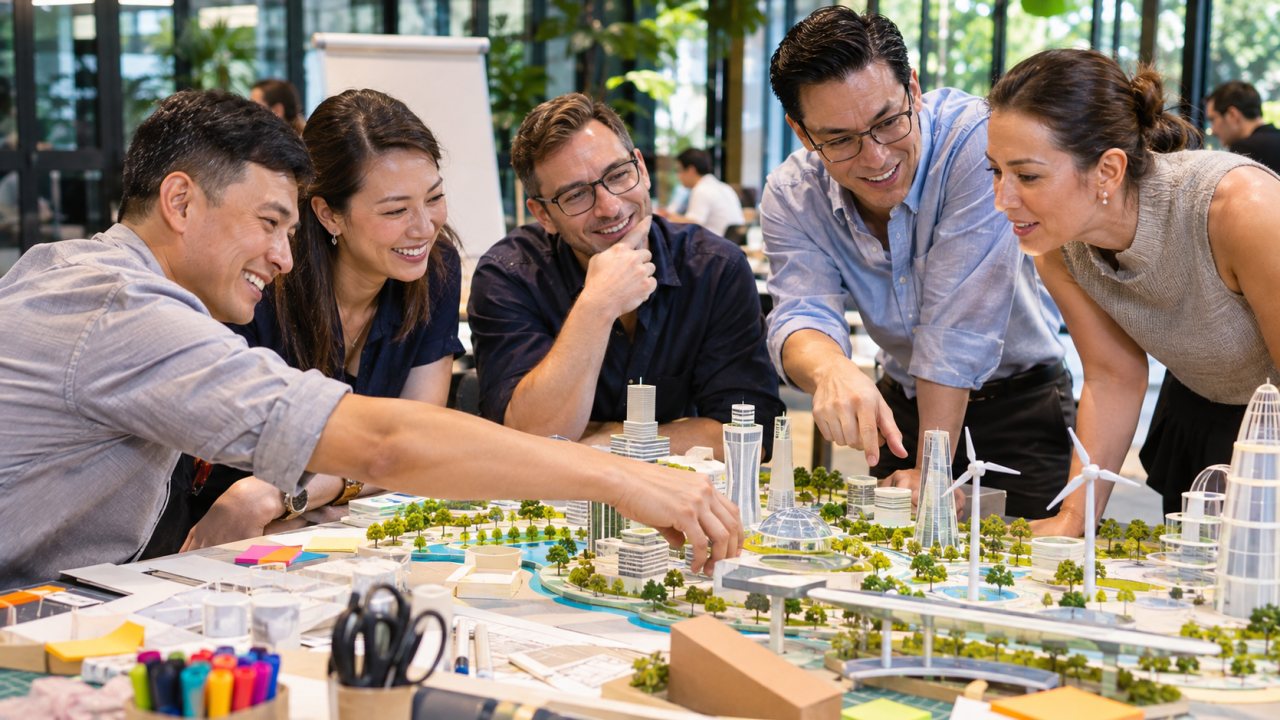
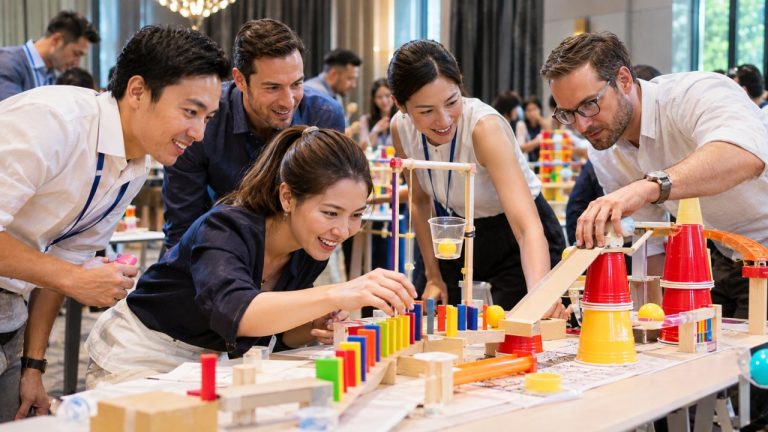
Future City 2040 asks teams to design and build the city of the future, one district at a time. Each team gets a brief — green energy, mobility, inclusion, work and play — and a kit of modular parts, then turns a blank base into a scale model of its district against the clock.
Building is only half the challenge. Teams must make real choices: what to prioritise, what to leave out, how their district connects to the ones beside it. The GoQuest app tracks milestones, and facilitators keep the making to pre-cut parts so every team finishes something real.
At the finale the districts lock together into one shared city, and each team pitches its vision to the room. A vote and a judging panel reward the smartest, most liveable designs, so the winning team is the one that thought as carefully as it built.
It runs for about two and a half hours indoors, for twenty to two hundred people in teams of five to six. We run it at your venue or ours, and can theme the brief to your organisation.
The Takeaways
A build to a brief turns creativity into decisions. Teams cannot include everything, so they argue priorities, trade off cost against ambition and commit — the core of strategy made physical. Seeing the choice take shape in the model makes the trade-offs impossible to dodge.
Because districts must connect, no team can design in isolation. Groups negotiate shared roads and edges with their neighbours, discovering that the best local plan can still fail the whole city. It is a vivid lesson in how strategy has to join up across an organisation.
Pitching the finished district gives the team a shared voice and brings quieter members into the story. Comparing visions against a brief and a vote turns subjective ideas into a fair contest, and the combined city shows everyone how their part served the whole.
In the debrief we link the build to work: how the team set priorities, connected with others and pitched its thinking. Each group notes two or three takeaways about strategy and creativity, and HR receives a short written summary within three working days.
Program flow
-
Welcome & the brief · 0–20 min
Teams meet the future-city challenge and receive their district brief and kit of modular parts. Facilitators explain the milestones, the connection rules and how the final vote works, so teams know they are building toward one shared city.
-
Design sprint · 20–50 min
Before building, teams sketch their district and agree priorities — what the brief demands, what they will leave out, and how their edges will meet their neighbours. The GoQuest app logs their plan as the first milestone.
-
Build the district · 50–105 min
Teams construct their scale model from pre-cut parts, turning decisions into a physical place. Facilitators keep the making on track so every team finishes, while the app marks progress and nudges teams that drift from their brief.
-
Connect the city · 105–125 min
Districts are brought together and must physically connect — roads, transport and shared spaces lining up across borders. Teams negotiate with their neighbours, adjusting designs so the whole city works, not just their own piece.
-
Pitches, vote & judging · 125–140 min
Each team pitches its district against the brief, and the room votes while a panel judges. The smartest, most liveable and best-connected designs win, rewarding thinking and teamwork as much as construction.
-
Debrief & HR summary · 140–150 min
A guided debrief links the build to work: priorities, connection and clear pitching. Each team notes two or three takeaways, and we capture the themes for the HR summary sent within three working days.
The game ends. The learning starts.
Every Phoenix program closes with a guided debrief. These are the questions for Future City 2040:
- What did your team choose to leave out, and why?
- Where did connecting with a neighbour change your design?
- How did you decide priorities when you could not do everything?
- Which other district’s idea impressed you most?
- Where does your real work need to join up better across teams?
What we bring, what you provide
We bring
- A modular building kit per team and the shared city base
- The full design brief, milestones and the GoQuest app
- A lead facilitator plus build support (one per fifty guests)
- Pitching, voting and judging run on the day
- A guided debrief and a written HR summary within three working days
You provide
- A room or hall with tables and space for the combined city
- A screen and sound for the brief, pitches and vote
- Power and reliable lighting for the build
- Any catering or refreshments around the session
- Phones for teams to use, or tell us if you need ours
Frequently asked questions
How many people can take part?
From twenty up to two hundred, in teams of five to six. More teams simply make a bigger, richer combined city at the finale.
How long does it take?
About two and a half hours, including the brief, design, build, connection, pitches and a short debrief. We can adjust the length to your day.
Do people need to be creative or technical?
No. The kit uses pre-cut, easy-to-assemble parts, so anyone can build. The challenge is in the choices and teamwork, not in craft skill.
Is everything made in the session?
Yes. We use pre-cut modular parts and templates so each district is designed and built within the time, with a finished model to pitch.
Can it be customised for us?
Yes. We can theme the brief around your industry, strategy or values, and brand the city. Custom briefs need about three weeks’ lead time.
Where can it run?
Any indoor venue with tables and room for the combined city — your office, a conference hall or ours.
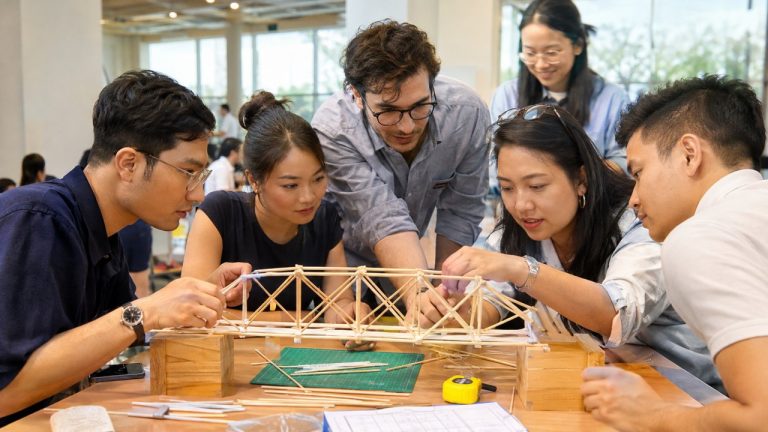
Load Test Bridge
Design it on a budget. Then see how much it holds.
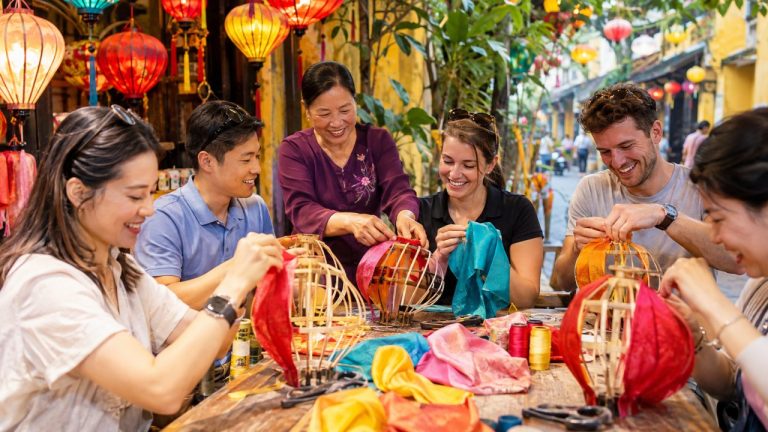 Hoi An
 Lantern Makers
Craft silk lanterns with local artisans, then light them up together.
Chain Reaction
Your part must trigger the next.
Request a quote for Future City 2040
Tell us your group size, date and goals. We will reply with a tailored proposal.